
Open Lens
Stagnation and Renewal: William James on Truth in a Fractured Moment

This morning’s dream lingered like a strange architecture. “I was walking inside a house carved entirely from rock,” I wrote in my journal, “the walls unyielding, the floor cool, and in one room a sculpture stood, silent as if it had always been there.” Dreams often offer us these hard, untranslatable spaces, and yet they press on us a kind of weight that resists dismissal. Rock, sculpture, stillness. Out of such fragments, we try to find what endures.
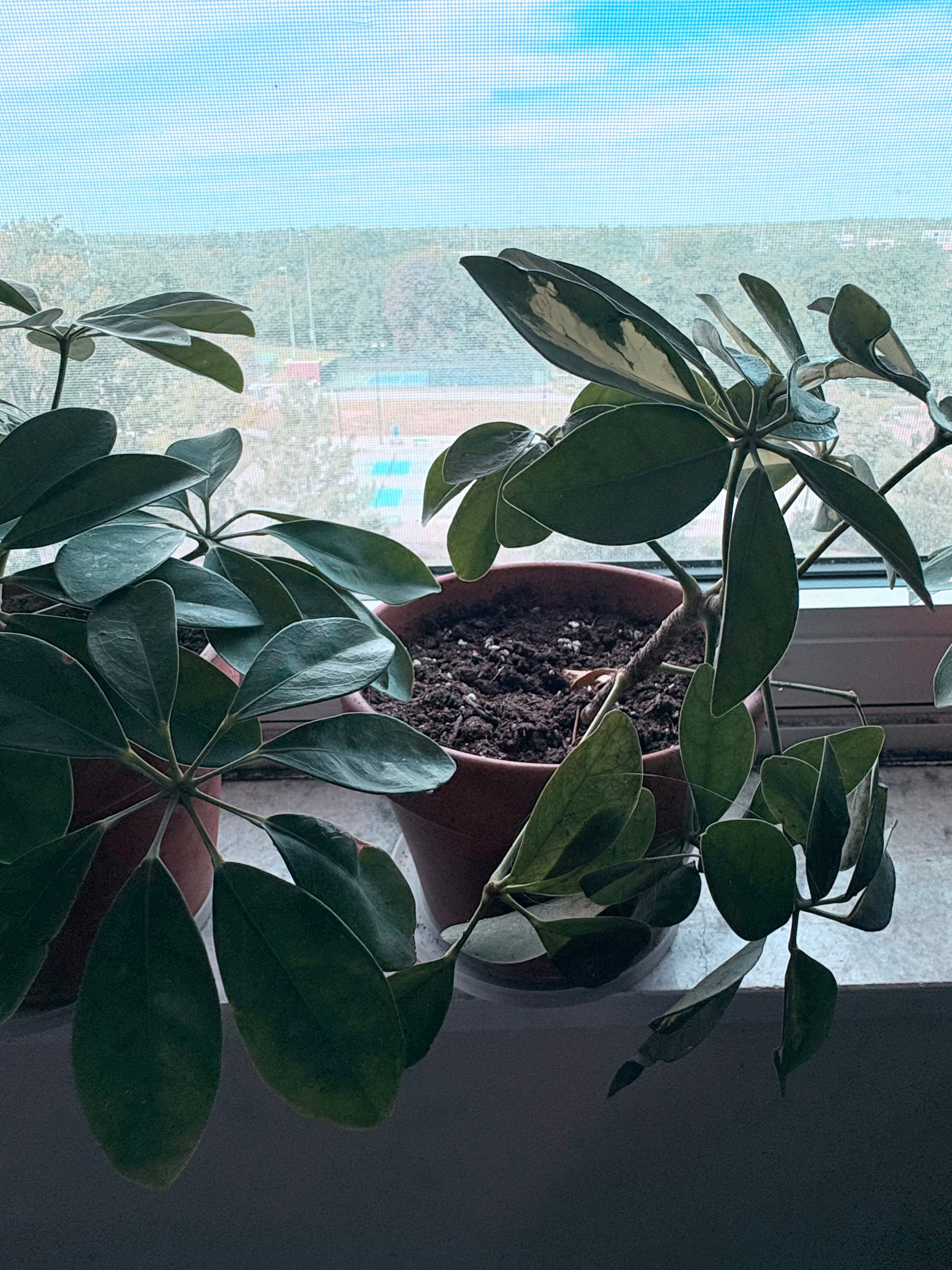
The schefflera plant at the window. I photographed it where the light was thin but still steady. Its leaves reach, though the pot is shallow. The soil may be tired, but the plant lives. It waits without complaint. In the language of the I Ching, today’s hexagram was “Keeping Still, Mountain,” paired with “The Receptive, Earth.” Images of patience and endurance. The mountain teaches stillness; the earth receives without argument.
And yet when you turn from the plant to the day’s headlines, the mood shifts sharply. The Wall Street Journal: hiring stagnant, Pentagon constrained, markets unsure. The New York Times: rainforests in Borneo destroyed for the lumber to make luxury RVs. The St. Louis Post-Dispatch: startups faltering, venture money drying. Three notes in a dissonant chord: contraction, consumption, collapse. We are asked to believe in growth, but growth itself is devouring the conditions of life.
The personal and the collective rarely line up neatly, but here they do. Rock house in the dream, still plant at the window, stagnant markets in the paper. All point to a field of arrested motion, of life under pressure.
And then, through another window, a different kind of headline — not print but testimony. The Bulwark published an interview with a colonel in the U.S. Air Force, removed from service under the new executive order banning transgender personnel. She told her story plainly: after 18 years, after service in Iraq and at the Pentagon, after coming out in 2016 and being met then with handshakes and cookies from her team, she is now told she is “undisciplined, dishonorable, lacking humility.” The words of the order cut deeper than the dismissal itself. She said, “It’s the humility piece that really gets me. Anyone who’s served knows the truth: you ask your comrades, ‘Do you have my back?’ If the answer is yes, the mission gets done. That’s it.”
The juxtaposition is almost unbearable: markets freeze, forests fall, soldiers dismissed for who they are. And yet — a plant endures in its pot. A dream shows a carved room that has held its silence for centuries. A colonel leaves the Pentagon with tears in her eyes, knowing she has told the truth about her own life and carried herself with integrity.
William James wrote that “truth happens to an idea. It becomes true, is made true by events.” For James, truth was not an abstract correspondence, but something tested in the cash value of lived experience. You know the truth of a bridge by whether it holds. You know the truth of a conviction by whether it enables life to be lived more fully, more coherently.
By James’s measure, the colonel’s service was true. It held. She led her teams well, she completed missions, she was respected by colleagues. The truth of her identity was proved not in debate but in daily performance. That is James’s pragmatism: the test of truth is not dogma but durability in the stream of experience.
Jung would add that archetypes emerge precisely in these compressed moments — mountain, earth, thunder. They arrive in images when the collective psyche is under strain. Your dream of the rock house is not separate from the colonel’s testimony. Both are saying: the enduring thing is not the market, not the policy, not the executive order. The enduring thing is the way truth manifests in lives lived authentically, even under duress.
The colonel recalled the moment in 2016 when she first came out. The Secretary of Defense had just announced the policy change. She sent the email, posted to Facebook, went down to the gym in the Pentagon basement and ran as fast as she could, terrified of what would happen. When she came back to her desk, colleagues walked over one by one and shook her hand: “It’s an honor to serve with you.” She was floored. She thought: the honor was mine. That moment — tested, public, vulnerable — proved itself true.
It is easy to despair at stagnation: the sluggish markets, the political paralysis, the forests turned to ash. But James would urge us to ask: what truths are being enacted in the midst of this? Where are lives holding? Where is courage proving itself? The plant on the sill does not move quickly, but it is alive. It takes the light and gives back oxygen. That is truth in James’s sense.
When Jung read the I Ching, he said it offered “a psychology of the moment” — a way to read meaning in fragments. You throw coins, and the pattern tells you something about your own psychic field. Today’s hexagrams — Mountain and Earth — suggest stillness and receptivity, not as passivity but as a stance of endurance. The colonel’s story enacts this too: she stood her ground, she received both welcome and dismissal, and she walked out with tears but not with shame.
The economy is stagnant, yes. But in James’s terms, the “cash value” of that stagnation may be that we are forced to re-examine what actually matters. If markets are not growing, if consumption collapses forests, perhaps truth lies elsewhere: in endurance, in solidarity, in care. James called this the “will to believe” — the wager that by acting as if certain possibilities are true, we make them more possible.
The plant at the window is one such wager. You keep watering it. You believe it will live. And it does. That is the will to believe, made leaf by leaf.
Toward the end of his life, James was troubled by the wars of nations and the fractures of culture. He longed for what he called “the moral equivalent of war” — a shared struggle that would bring out courage without destruction. Perhaps what we are living now, in fragments, is that struggle: to defend the dignity of trans soldiers, to hold faith with the earth, to survive economic stagnation without losing human solidarity.
The dream of the rock house lingers. A sculpture sits inside it, silent, carved long ago. The plant keeps growing in its narrow pot. The colonel walks out of the Pentagon, shoulders squared, colleagues whispering “It has been an honor.”
Truth is not an abstraction. It is the house that still stands, the plant that still grows, the courage that still carries. James would say: truth happens. It happens in the handshake, in the endurance of leaves, in the refusal to believe a lie about who belongs.
Emily Dickinson, our companion in this experiment, once wrote:
“Tell all the truth but tell it slant —
Success in Circuit lies.”
The circuit is wide today: from dream to plant to headline to soldier to philosopher. But the truth is still being told. Not in perfection, not in abstraction, but in the fragments that hold together when we dare to believe them.
TRUTH endures.
Thanks be to God!